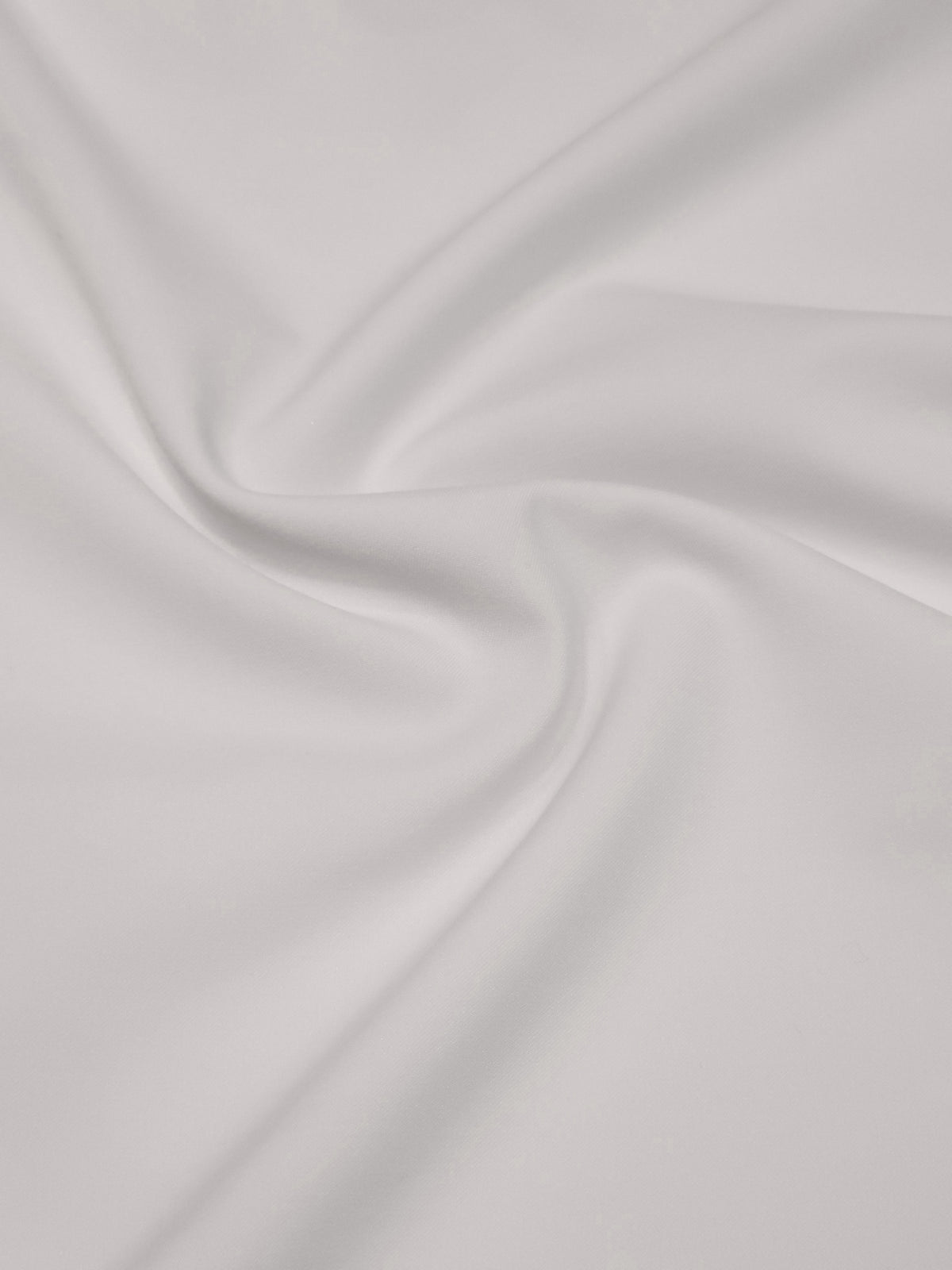
Crepe fabric is a draped, elegant, and flexible woven fabric with a slightly pebbled texture.
It takes its name from the French word “crêpe” (wavy, wrinkled surface). This special weaving technique creates a rippled texture on the fabric’s surface, giving crepe fabric its characteristic elegance.
Crepe fabrics can be made from polyester, viscose, silk, cotton, or elastane blends. Depending on the type of fabric, they are available in matte, semi-glossy, or draped forms. Thanks to this versatility, they have a wide range of uses, from classic clothing to modern designs.
⸻
Features of Crepe Fabric
• Its pebbled and textured surface makes it wrinkle-resistant.
• Its draped and fluid structure provides an elegant fit on the body.
• Matte or slightly glossy surface options are available.
• It is lightweight, breathable, and soft, making it suitable for year-round wear.
• Stretch or Lycra versions provide freedom of movement.
• It dries quickly and retains its shape for a long time.
Types of Crepe Fabric
There are many types of crepe fabric, each with a different texture and intended use:
Crepe Satin: An evening wear fabric with a smooth, glossy, and silky surface.
Double Crepe: Thick and substantial, with both sides usable; it is preferred for draped dresses.
Viscose Crepe: Contains natural fibers, is breathable, and is ideal for summer clothing.
Crepe Chiffon: Used for blouses, shirts, and evening wear tops with its sheer, thin, and elegant texture.
Lycra Crepe (Stretch): Stretchy due to its elastane content, offering comfortable and shape-retaining wear.
Micro Crepe: The type of crepe with the least pronounced crepe texture, yet it offers all the other features of crepe fabric.